You launch a coin, refresh the page, and before you've bought a second time the chart is up 20% and the top holders list has wallets you've never seen. Nobody on your team clicked that fast, and nobody else could have either. Those buys came from sniper bots: programs that watch for new tokens and buy in the first block or two, before any human can react. This guide explains how they work, what they actually cost your launch, how to spot them, and what you can do about them.
What is a sniper bot?
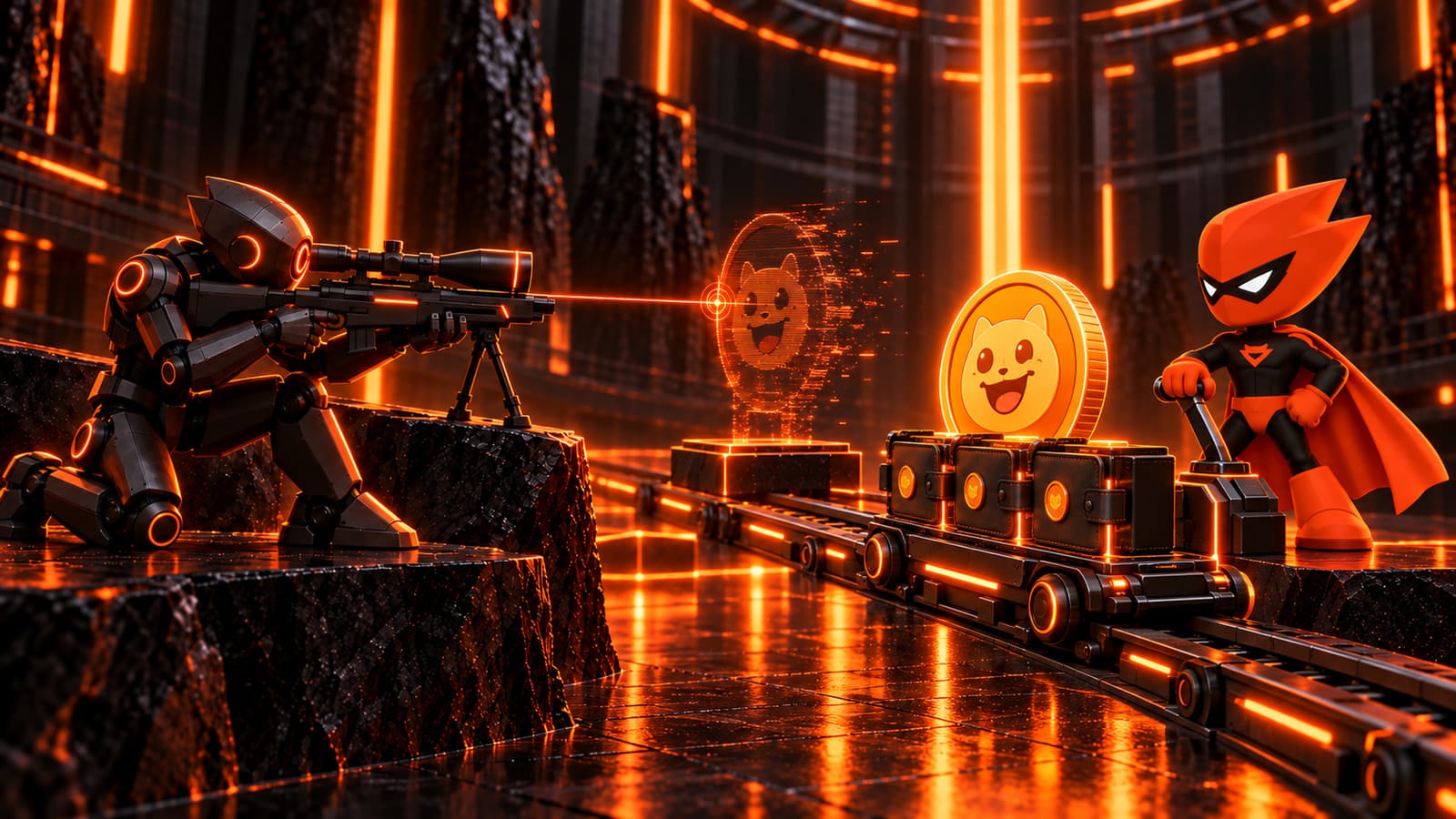
A sniper bot is an automated trader that buys a token the moment it becomes tradable: in the same block as the launch, or within a block or two of it. On Solana a block takes about 400 milliseconds, so "first" is measured in fractions of a second. The bot's bet is simple. The earliest buyers get the lowest price on the bonding curve or in the new pool, and if real buyers arrive after them, the bot sells into that demand at a higher price.
Sniping is not the same thing as a rug pull or a scam. Most snipers are just traders with faster software, and many of them lose money on coins that never get real buyers. But for a token team they matter, because they decide who holds the cheapest supply and who sells first.
How sniper bots are so fast
A sniper doesn't wait for your coin to show up on a website. It works in three steps, all automated:
- Watch. The bot streams on-chain activity directly from the network and reacts to new events: a coin created on a launchpad, a pool created on a DEX, liquidity added, trading switched on.
- Decide. In a few milliseconds it applies its filters. Some buy almost everything. Others check the creator wallet's history, the name and ticker, the dev buy size, or whether the coin has socials, and skip anything that looks like a likely dud.
- Land. It sends a buy with a high priority fee, usually through the routes block builders use for fast inclusion (on Solana, Jito bundles and similar services), often from several wallets at once so a single slow route doesn't cost it the trade.
The result: on a busy launchpad, the first outside buys on a new coin regularly land within a block or two of its creation, long before anyone has seen the coin in a feed.
Snipers vs bundlers vs MEV bots
These terms get mixed up constantly. They are different things, and the fixes are different too.
| What it does | When | What it means for you | |
|---|---|---|---|
| Sniper | Buys a new token as early as possible, then sells into later buyers | The first blocks after launch | Takes cheap supply and sells it into your first real demand |
| Bundle | Lands several transactions together in one block, all or nothing. A launch bundle puts the coin's creation and the team's buys in the same block | At creation | Who buys first is decided by the bundle, not by a race. More in our bundling tool comparison |
| MEV bot | Trades around other people's transactions, for example buying just before a big buy and selling just after it (a sandwich) | Any time the token trades | A hidden cost on every trade, yours included. See what MEV is and why token teams care |
| Copy and volume bots | Follow known wallets, or chase coins whose volume is spiking | Minutes to hours in | The second wave of buyers, and often the first wave of sellers |
A single operator can run all of these, and one wallet can snipe on one coin and sandwich trades on another. That's why "is this wallet a sniper?" is usually a question about one trade, not about the wallet.
What snipers do to your launch: the numbers
Here is a simple model of a Pump.fun launch on the SOL curve (30 virtual SOL against 1.073 billion virtual tokens, 1.25% trading fee). It is not a real trade, and it ignores network fees and tips, but the curve maths is exactly what every buyer on that curve gets.
A sniped launch, modelled
- Launch block. The creator buys 1 SOL (3.4% of supply). A sniper buys 2 SOL one block later and gets 6.2%, nearly twice as much, at almost the same price.
- Real buyers arrive. 25 SOL of buys over a few minutes take the market cap to about 103 SOL.
- The sniper sells everything. It takes out about 5.7 SOL for its 2, and the chart drops 19% in one candle. The real buyers' 25 SOL is now worth about 20.6.
- What if something buys into that sell? Spending 50% of the sniper's proceeds on a buy-back as it sells cuts the drop from the peak to about 10%.
Two things in that model are worth noticing. First, the sniper's profit came straight out of the first real buyers, which is why a sniped chart so often turns early supporters into sellers. Second, the damage to the chart came from one sell at the moment demand was strongest: on the chart, it's the familiar spike followed by a long red candle, and it makes the next wave of buyers hesitate.
The same model shows what changes it. If the team's own buys come first and are larger (say 5 SOL in the launch bundle instead of 1), the sniper pays a higher price, gets about 4.9% instead of 6.2%, and makes about 3.2 SOL instead of 3.7. That's better, but it doesn't make sniping unprofitable: the sniper still sells into the same real demand. And if someone spends half of the sniper's proceeds buying back, right as it sells, the drop from the peak shrinks from about 19% to about 10%. Defending against snipers is mostly about those two levers: who holds the cheapest supply, and whether anything absorbs the sell when it comes.
How to spot sniper bots on a chart
None of these signs proves anything on its own, and a fast human or an excited community member can trip any one of them. Taken together, they're a good picture of who bought early and why.
- Timing. Buys in the same block as the coin's creation, or the block after it, are almost always automated. Block explorers and trading terminals show the slot or block of each trade.
- Fresh wallets. Wallets that were funded minutes before the launch, hold nothing else, and have never traded before.
- Shared funding. Several early buyers funded from the same source wallet, or from one another. Holder mapping tools such as Bubblemaps draw these links as clusters.
- Matching sizes. A row of early buys of nearly identical size, often round numbers or the same value with small random noise added.
- High priority fees and tips. Early buys that paid far more than normal to land quickly.
- Fast exits. Full sells within seconds or minutes of the first real demand, often from several of those wallets at about the same time.
Look at this the same way traders will: before buying, many of them open the top holders list and the first trades. If your launch looks heavily sniped, they will assume the early supply is about to be sold, whether it is or not.
How to protect your launch from sniper bots
You can't stop snipers from existing. On an open launchpad, anyone can buy one block after you. What you can control is how much cheap supply they get, how much their sells hurt, and whether your holders understand what they're looking at.
1. Put your team's buys first, openly
On most launchpad websites only the creator's first buy lands with the coin's creation. Everyone else on the team buys afterwards, racing the snipers, at a higher price. A launch bundle sends the creation and all the team's buys together in one block, so nobody can buy in between and the team's buys are the first on the curve. Size that buy deliberately: the team's share shows up in the holders list, and buyers will judge it. Being upfront about which wallets are the team's (in your announcement, your website or your community) is what turns a big early position from a red flag into a known quantity.
2. Don't leak the launch
Snipers that filter by name, ticker or creator wallet do better when they know what's coming. Don't post the contract address before the coin exists, don't reuse a creator wallet with a public history, and remember that a launch time announced to the minute is announced to bots too. A stealth launch won't stop bots that buy everything, but it does stop the ones waiting for your coin in particular.
3. Make the first sell hurt less
The sniper's exit is predictable: it comes when real demand peaks. If something buys part of that sell as it happens, the sell has less price impact. This is buy-side market making, and it's one half of counter trading: when someone sells, you buy back part of it. Have the budget set aside before you launch, because the first big sell usually comes within minutes.
4. Don't feed the dump
The worst moment for the team to sell is right as the snipers do. Your sell and theirs land on the same buyers, and the red candle gets much bigger. If the team is taking profit, sell into demand in small pieces over time instead of in one market sell. Selling into buys is the other half of counter trading.
5. Use the launchpad's own settings, with care
Some launchpads, mostly on EVM chains, let a token charge a trading tax, and a tax that is high for the first minutes and then drops changes the economics of sniping. It can help, but buyers and token scanners read them carefully. If you use one, keep it within what the launchpad supports, make it visible and time-limited, and say so in your launch announcement. Custom contract tricks such as blacklists or hidden sell restrictions are a different matter: they're exactly what honeypots look like, scanners flag them, and they can cost you far more trust than snipers ever would.
6. Explain the chart to your holders
Your community will see the spike and the red candle. A short, factual message ("bots bought in the first blocks and sold at the top, here are the team wallets, here's what we're doing") goes further than silence. Clear, accurate communication about who holds what is also the habit that keeps a project on the right side of buyers' trust in the long run.
What doesn't work
- Trying to out-race them by hand. A human with a fast connection is still several hundred milliseconds behind a bot that reacts to the creation event itself.
- Launching at an "off" hour. Bots don't sleep. A quiet hour means fewer real buyers, not fewer snipers.
- Assuming a bundle makes you sniper-proof. A bundle decides who buys first. Snipers can still buy in the very next block. It moves them to a higher price; it doesn't remove them.
- Selling to "punish" them. Dumping team supply to push the price below the snipers' entry hurts your real holders far more than it hurts a bot that bought in at a 34 SOL market cap.
How Sumo helps you deal with snipers
Sumo is a launch and trading platform for token teams. It can't make snipers disappear, and nothing honestly can, but it handles each of the defences above:
- Team buys in the launch block. On Pump.fun and other supported launchpads, Sumo sends the coin's creation, the dev buy and buys from the team's other wallets as one bundle, so the team's buys are the first on the curve and the team's share is set before any outside buyer arrives. Buy Setup shows how much supply each SOL amount buys and what market cap the chart opens at. See how to launch a token on Pump.fun for the full walkthrough.
- Buying into the first sells. Counter Trade watches your pool and, with Auto Buy Into Sells, buys back part of each outside sell above your trigger size as it happens. It's ready from the moment the coin is live, so it's in place when the early sellers exit.
- Selling into demand, not into the dump. Auto Sell Into Buys, DCA and limit orders take profit in small pieces when buyers arrive, instead of in one large sell.
- Seeing who's trading. The Live Trading view tags trades with what they are (new holders, full exits, MEV actors and victims, holder size and the trading platform used), and its holder analysis shows concentration at a glance. Bubblemaps opens straight from the chart to show clusters of related wallets.
- Not feeding MEV bots. Sumo routes trades with MEV protection where the chain supports it, and Counter Trade can ignore known MEV wallets, so your own strategy doesn't trade against them.
FAQ
What is a sniper bot in crypto? A sniper bot is an automated trader that buys a new token the moment it becomes tradable, usually in the same block as the launch or within a block or two of it. It aims to get the lowest price on the bonding curve or in the new pool and then sell to the buyers who arrive later.
Is a sniper the same as a rug pull? No. A sniper is an outside trader that buys early and sells into later demand. A rug pull is when the people behind a token take the money or liquidity and abandon it. Snipers can make a chart look like a pump and dump, but most of them are simply faster traders, and many lose money on coins that never get real buyers.
Can you stop sniper bots completely? Not on an open launchpad: anyone can buy one block after the launch. What a team can control is who gets the cheapest supply (by putting its own buys first in a launch bundle), how much the snipers’ sells move the price (by buying into those sells), and how clearly holders understand what happened.
Does a bundled launch stop snipers? A launch bundle lands the coin’s creation and the team’s buys in the same block, so nobody can buy in between and the team buys first. Snipers can still buy in the next block, at a higher price. A bundle reduces their edge; it does not remove them.
How do I know if my token got sniped? Look at the first trades and the top holders. Buys in the creation block or the block after it, fresh wallets funded minutes before launch, several early buyers funded from the same source, near-identical buy sizes, unusually high priority fees and fast full exits are all signs of automated early buying. No single sign proves it; together they give a clear picture.
Do sniper bots work on Pump.fun and other launchpads? Yes. Snipers watch every busy launchpad and DEX, on Solana and on EVM chains such as BNB Chain and Base, for new coins and new pools. On Pump.fun only the creator’s first buy lands with the coin’s creation, so everyone else on a team launching from the website buys after the first bots.
New to the slang? The memecoin dictionary translates it. Planning your first coin? Start with how to launch a memecoin in 2026 and what a launch costs.
Related Sumo docs
- Counter Trade: trigger sizes, capture percentages and MEV exclusion.
- Live Trading: trade tags, holder analysis and the trade feed.
- Bubblemaps analysis: holder clusters from the chart.
- Pump.fun launch: every step of a bundled launch.
This article is general information about how token launches and trading bots work. It is not financial, investment or legal advice. The worked example is a simplified model, not a record of a real trade.